Best food in Morocco.
Moroccan cuisine is a mix of North African flavors. It comes from different cultures. The country sits at the crossroads of Africa, Europe, and the Mediterranean. This makes it a place where many culinary traditions meet.
The unique blend of Arab, Berber, and Mediterranean tastes has created a special kind of food. Moroccan dishes are known for their aromatic spices, fragrant herbs, and fresh ingredients. This shows the country’s history and culture in every bite.
Key Takeaways
- Moroccan cuisine is a blend of North African, Arab, and Mediterranean flavors.
- The country’s strategic location has influenced its culinary traditions.
- Aromatic spices and fragrant herbs are characteristic of Moroccan cooking.
- Moroccan cuisine reflects the country’s rich cultural heritage.
- The unique blend of flavors has given rise to a distinct culinary identity.
The Rich Heritage of Moroccan Cuisine
Moroccan cuisine is deeply rooted in a rich cultural heritage. It’s shaped by various historical influences. This cuisine is more than just food; it’s a reflection of the country’s diverse cultural identity.
Berber, Arab, and Mediterranean Influences
Moroccan cuisine is a unique mix of Berber, Arab, and Mediterranean flavors. The Berber influence is seen in local ingredients like olives, almonds, and honey. The Arab influence brought in spices like cumin, coriander, and cinnamon, now key in Moroccan cooking. The Mediterranean influence is seen in seafood dishes and olive oil use.
This mix of influences has created a distinct culinary tradition. It’s both flavorful and aromatic. The blend of spices, herbs, and other ingredients gives Moroccan cuisine its unique taste.
The Significance of Food in Moroccan Social Life
Food is very important in Moroccan social life. Meals are seen as chances to come together, strengthen bonds, and build community. In Morocco, food is about more than just eating; it’s about hospitality and generosity.
Traditional meals are served on large, communal platters. This encourages togetherness and sharing. Sharing food is a big part of Moroccan culture, showing respect for guests and hospitality.
Traditional Cooking Methods and Utensils
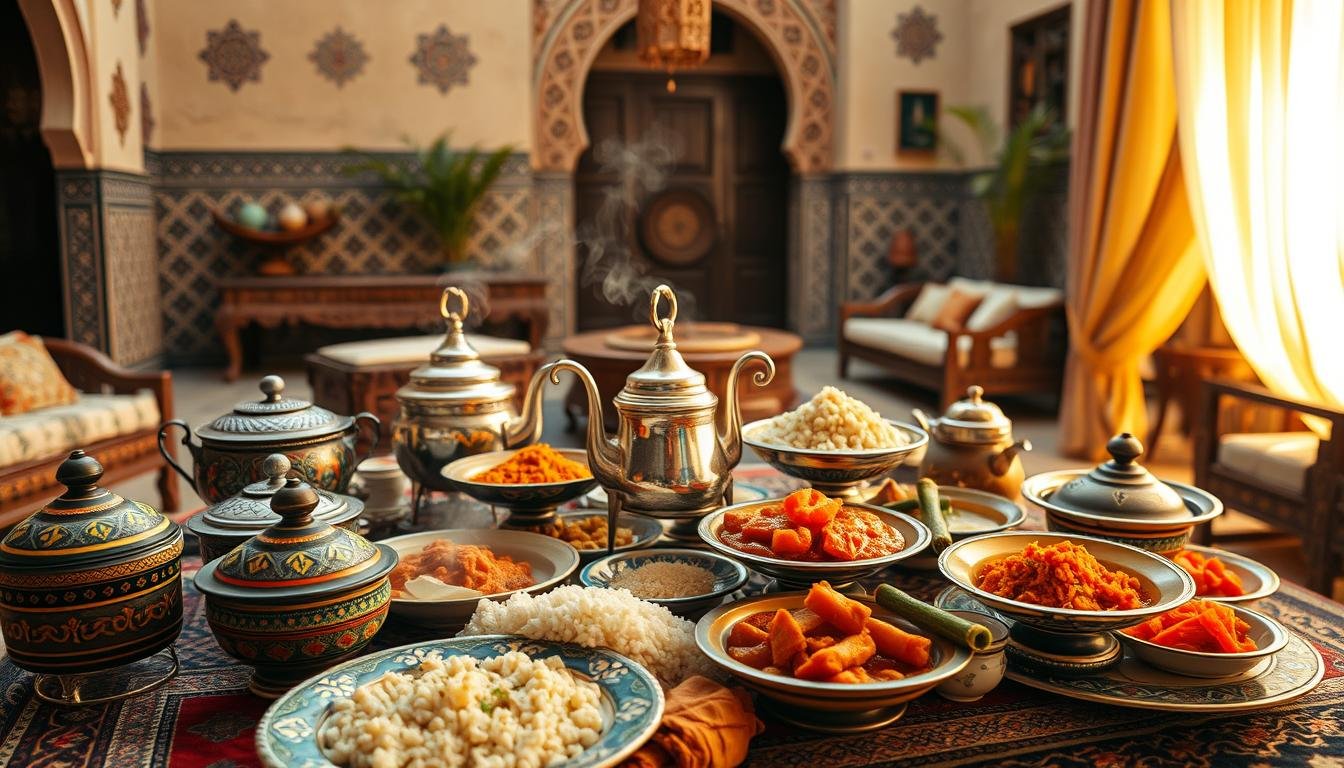
Moroccan cooking uses traditional methods and utensils. The tagine, a clay pot with a conical lid, is iconic. It’s used for slow cooking and keeping flavors. Wooden spoons and mortar and pestle are also used to prepare and mix ingredients.
| Traditional Utensil | Description | Use in Moroccan Cuisine |
|---|---|---|
| Tagine | A clay pot with a conical lid | Slow cooking stews and dishes |
| Wooden Spoons | Used for mixing and stirring | Preparing and serving traditional dishes |
| Mortar and Pestle | Used for grinding spices and herbs | Preparing spice blends and marinades |
These traditional cooking methods and utensils add to the rich flavors and textures of Moroccan cuisine.
Essential Spices and Ingredients in Moroccan Cooking
Moroccan cuisine is known for its rich spices and ingredients. This creates a unique flavor that is both aromatic and tantalizing. The country’s culinary heritage comes from its history and geography. Various cultures have shaped its distinctive dishes.
The Famous Moroccan Spice Blends: Ras el Hanout
Ras el Hanout, meaning “head of the shop,” is a complex spice blend. It includes over 30 ingredients like cinnamon, cumin, and ginger. This spice mix adds depth and warmth to dishes like tagines and couscous.
Preserved Lemons and Olives
Preserved lemons and olives are key in Moroccan cuisine. They add a salty, tangy flavor. Lemons are pickled in brine, while olives are cured in salt or oil. Both enhance the taste of tagines, salads, and more.
Argan Oil and Other Unique Moroccan Ingredients
Argan oil, from argan tree nuts, is highly valued in Moroccan cooking. It has a rich, nutty flavor and health benefits. Other unique ingredients include preserved lemons, olives, and spices like parsley and mint.
| Ingredient | Use in Moroccan Cuisine |
|---|---|
| Ras el Hanout | Spice blend used in tagines, couscous, and other dishes |
| Preserved Lemons | Adds salty, tangy flavor to tagines and salads |
| Argan Oil | Used in cooking and as a finishing oil for its nutty flavor |
Iconic Tagine Dishes: The Heart of Moroccan Cooking
The Tagine is at the core of Moroccan cooking. It’s a slow-cooked stew that’s full of flavor and aroma. This dish gets its name from the clay pot it’s cooked in, and it’s a key part of Moroccan cuisine.
Lamb Tagine with Prunes and Almonds
The lamb Tagine with prunes and almonds is a favorite. It’s a mix of sweet and savory, with tender lamb, sweet prunes, and crunchy almonds. The slow cooking makes the lamb tender and easy to shred.
Spices like cinnamon, ginger, and cumin give it a unique Moroccan taste. It’s often served on special occasions, impressing everyone with its rich flavor and aroma.
Chicken Tagine with Preserved Lemons and Olives
The chicken Tagine with preserved lemons and olives is another hit. It’s tangy and salty, thanks to the preserved lemons and olives. The chicken is cooked just right, soaking up all the flavors.
This Tagine shows off Moroccan cuisine’s skill in mixing flavors. The preserved lemons add a salty taste, while the olives bring a briny flavor that pairs well with the chicken.
Vegetarian Tagines: Berber and Seven Vegetable Varieties
Vegetarians have plenty of Tagine options, like the Berber Tagine and the Seven Vegetable Tagine. The Berber Tagine is full of spices and has a mix of vegetables and sometimes eggs or cheese in a flavorful broth.
The Seven Vegetable Tagine is colorful and healthy. It’s made with carrots, potatoes, zucchini, and tomatoes, all slow-cooked in a spicy tomato sauce.
The Art of Slow Cooking in a Clay Pot
The secret to a great Tagine is slow cooking. The clay pot helps distribute heat evenly, letting the ingredients cook slowly and soak up all the flavors. This cooking method is not just about the food; it’s also a way to bring people together.
In Morocco, making a Tagine is a social event. Family and friends gather around the pot. The slow cooking fills the home with delicious smells, making everyone excited for the meal.
Couscous: Morocco’s National Dish
Couscous is a beloved dish in Morocco, often called the national dish. It’s made from durum wheat semolina and is a key part of Moroccan food.
Traditional Friday Couscous Customs
In Morocco, couscous is a Friday tradition, a day for family. Making couscous is a family effort. It’s steamed with vegetables and meat, soaking up flavors.
This custom brings families together. It shows how important couscous is in Moroccan culture.
Regional Variations from North to South
Couscous varies across Morocco, with each region adding its own twist. In the north, it’s with vegetables and light broth. In the south, it’s with spicy sauces and meats.
These differences show couscous’s flexibility and how it fits local tastes.
The Proper Way to Eat Couscous
Eating couscous in Morocco is a special experience. It’s eaten with the hands, shaping into small balls. It’s served with vegetables, meats, and sauces.
This way of eating is more than just a meal. It’s about sharing and cultural bonding.
Modern Interpretations of Classic Couscous
Modern chefs in Morocco are trying new things with couscous. They make couscous salads, add grilled fish, or even vegan options. These new ideas show couscous’s versatility and its ability to evolve.
In conclusion, couscous is more than a dish in Morocco. It symbolizes unity, tradition, and heritage. Whether in a traditional setting or a modern twist, couscous remains central to Moroccan cuisine.
Best Food in Morocco: Street Eats and Market Delicacies
Moroccan street food shows the country’s rich culture and food traditions. The lively street food scene is a key experience for anyone visiting Morocco.
Jemaa el-Fnaa Market Specialties in Marrakech
Jemaa el-Fnaa, in Marrakech’s heart, is famous for its street food. Here, you can try many local treats, like grilled meats and pastries. It’s famous for grilled sausages and fresh fruit juices.
Moroccan Sandwiches: Bocadillos and Briouat
Moroccan sandwiches are a big hit in street food. Bocadillos are filled with meats, cheeses, and veggies in crusty bread. Briouat are savory pastries with meat, onions, and spices, deep-fried.
Snail Soup and Other Adventurous Street Foods
For the bold, Moroccan street food has unique dishes like snail soup. It’s snails in a tasty broth, good for colds and hangovers.
Harira Soup and Ramadan Food Traditions
Harira is a Moroccan soup with tomatoes, lentils, chickpeas, and spices. It’s key during Ramadan to break the fast. Making and sharing Harira is a big part of Moroccan culture and hospitality.
Moroccan street food is more than just food. It’s an experience of sights, sounds, and smells of local culture. Whether in markets or from vendors, Moroccan street food is a journey you won’t want to miss.
Regional Culinary Specialties Across Morocco
Morocco’s varied landscapes have created many regional foods. From the coast to the mountains and desert, each area has its own flavors. This diversity makes Moroccan cuisine truly special.
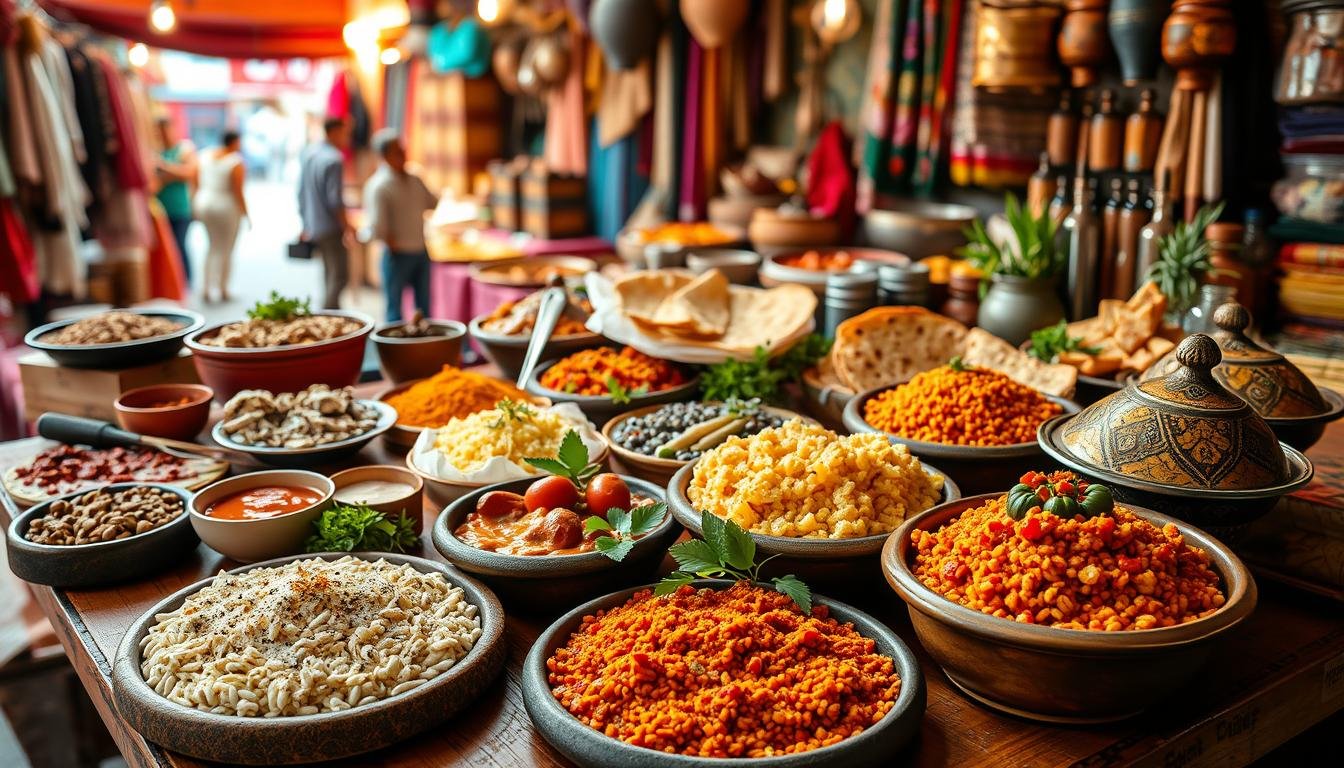
Coastal Seafood Dishes of Essaouira and Agadir
Essaouira and Agadir are known for their fresh seafood. You’ll find grilled fish, seafood tagines, and fried calamari here. Essaouira is famous for its sardines, often grilled or in a tagine.
The fresh seafood, combined with local spices and herbs, gives coastal Moroccan food a unique taste.
Fez’s Complex Flavors and Royal Cuisine
Fez, Morocco’s ancient capital, is famous for its complex cuisine. It’s called “royal cuisine.” Pastilla (a savory pie) and mechoui (slow-roasted lamb) are just a few examples.
Fez’s food is known for its rich flavors and detailed preparation. This reflects its historical importance as a cultural and political center.
Berber Mountain Food of the Atlas Region
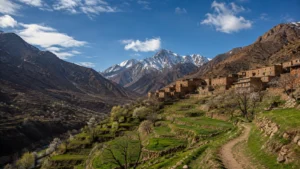
The Atlas Mountains are home to the Berber people. They have a unique cuisine based on local ingredients like lamb and goat meat. Traditional dishes include stews and tagines made with local ingredients.
Preserved meats and dried fruits are also common. This shows the resourcefulness and resilience of Berber cuisine.
Desert Delicacies from the Saharan Regions
The Saharan regions of Morocco offer a unique culinary experience. The harsh desert environment and ancient trade routes have shaped the cuisine. Dates, camel meat, and traditional breads are staples.
Dishes like camel tagine and date-based desserts are typical of the region. Exploring Morocco’s regional foods gives us a glimpse into its diverse culture and rich culinary traditions.
Sweet Treats and Desserts of Morocco
Moroccan sweets are a feast for the senses. They show the rich cultural diversity of the country. From pastries to honey and nut desserts, there’s something for everyone.
Pastries: Chebakia, Ghriba, and Kaab el Ghazal
Moroccan pastries are famous for their beautiful designs and tasty flavors. Chebakia is a fried pastry covered in honey and sesame seeds. It’s enjoyed on special days.
Ghriba is a pastry made with ground almonds. It’s often flavored with rose water or orange blossom water. Kaab el Ghazal, or “gazelle horns,” are crescent-shaped pastries filled with almond paste and topped with powdered sugar.
Honey and Nut Desserts: Sellou and Halwa
Honey and nut desserts are a big part of Moroccan cuisine. Sellou, also known as “Sfouf,” is a traditional dessert. It’s made from roasted flour, nuts, and honey, flavored with cinnamon and spices.
Halwa is a dessert that comes in many flavors. It’s made with sugar, water, and sometimes includes almonds or rose water.
Fresh and Dried Fruit Desserts
Morocco’s desserts also feature fresh and dried fruits. These desserts are simple yet full of flavor. They show off the country’s rich produce.
Fresh fruits like oranges, dates, and grapes are used. Dried fruits like apricots and prunes are also favorites.
Moroccan Pastilla: The Sweet and Savory Delicacy
Moroccan Pastilla is a unique dessert. It combines sweet and savory flavors. The sweet version is made with layers of flaky pastry, almond paste, and powdered sugar. It’s often flavored with rose water or orange blossom water.
| Dessert | Main Ingredients | Occasion |
|---|---|---|
| Chebakia | Honey, sesame seeds, flour | Special occasions |
| Ghriba | Almonds, rose water, sugar | Festivals and celebrations |
| Sellou | Raisins, almonds, honey | Ramadan and special events |
Moroccan Beverages: From Mint Tea to Fruit Juices
Moroccan drinks range from mint tea to fresh fruit juices. These beverages are a big part of Moroccan culture and tradition.
The Art and Ritual of Preparing Mint Tea
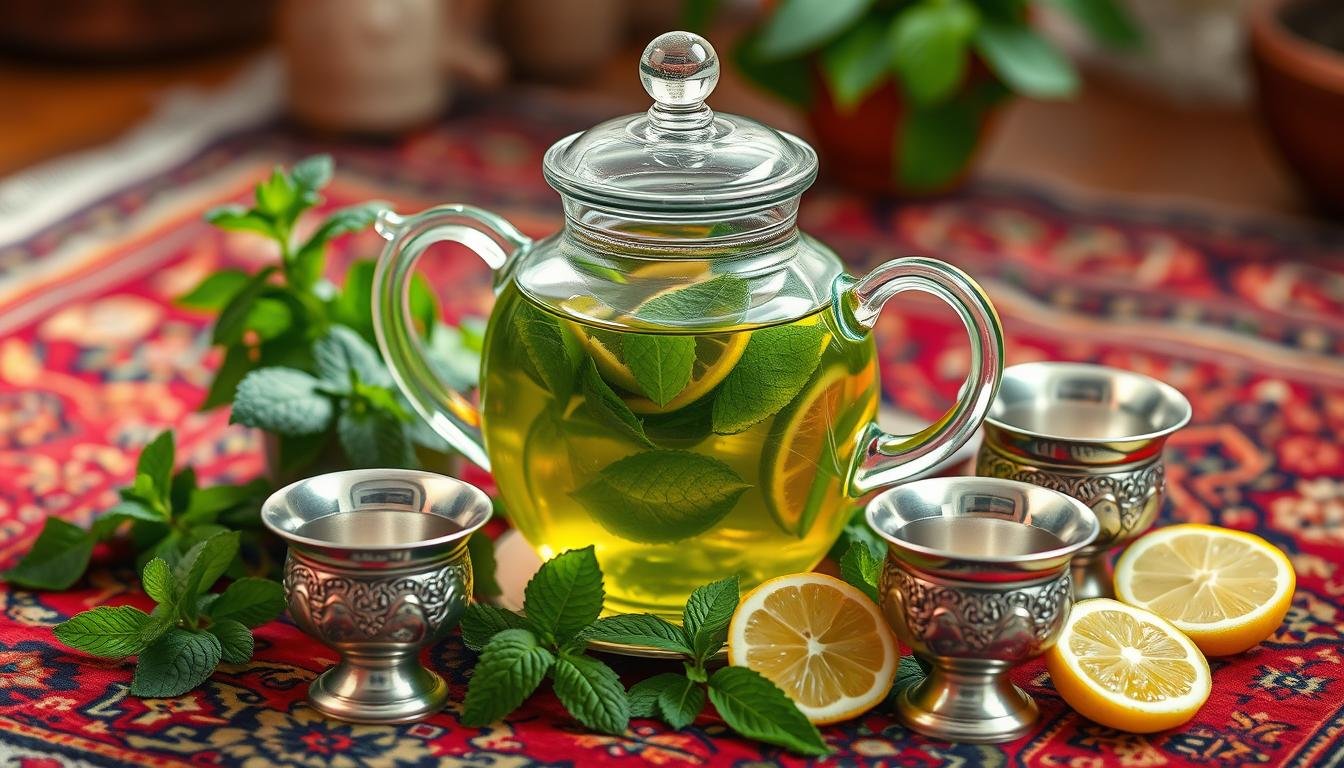
Mint tea is more than a drink in Morocco. It’s a sign of welcome and friendship. To make it, you need green tea, fresh mint, and sugar.
The tea is poured high to make a frothy top. This froth shows the host’s care and hospitality.
Fresh Fruit Juices: Orange, Avocado, and Pomegranate
Fruit juices are a big hit in Morocco. Orange juice is very popular, made from fresh oranges. Avocado juice, or “Avocado smoothie,” is also loved, often mixed with milk or yogurt.
Pomegranate juice is another favorite. It’s full of antioxidants and loved by locals and visitors.
Coffee Culture in Modern Morocco
Coffee culture in Morocco is changing. Modern cafes are opening in cities like Marrakech and Rabat. Traditional coffee is served in small cups, often with cardamom flavor.
Now, espresso-based drinks are becoming more popular. This shows Morocco’s coffee scene is adapting to new trends.
Traditional Dairy Drinks: Buttermilk and Almond Milk
Buttermilk and almond milk are traditional in Moroccan cuisine. Buttermilk is refreshing on hot days. Almond milk is used in desserts and drinks.
In conclusion, Moroccan drinks offer a wide range of flavors and cultural experiences. From mint tea to modern coffee, there’s something for everyone in Morocco.
Conclusion: Embracing the Flavors of Morocco
Moroccan cuisine is a vibrant mix of the country’s rich culture. It’s shaped by Berber, Arab, and Mediterranean influences. The diverse dishes and cooking methods make it a unique culinary journey.
From slow-cooked tagines to fluffy couscous, Moroccan food is a feast for the senses. It offers exotic and inviting flavors. Exploring Moroccan cuisine, we find a world of aromas and tastes rooted in history and tradition.
Whether you love food or are just starting to explore, Moroccan cuisine has something for everyone. Its bold flavors and vibrant colors have made it popular worldwide. So, join us on a culinary adventure through Morocco and discover its incredible North African cuisine.
FAQ
What are the main influences on Moroccan cuisine?
Moroccan cuisine is shaped by Berber, Arab, and Mediterranean cultures. These influences have created its unique flavors and cooking methods.
What is Ras el Hanout, and how is it used in Moroccan cooking?
Ras el Hanout is a famous Moroccan spice blend. It means “head of the shop.” It’s a mix of spices like cumin, coriander, cinnamon, and turmeric. It adds depth to dishes like tagines and couscous.
What is the significance of couscous in Moroccan cuisine?
Couscous is Morocco’s national dish, served on Fridays. It symbolizes hospitality and is enjoyed at special occasions.
What are some popular street foods in Morocco?
Popular street foods include bocadillos and briouat sandwiches, snail soup, and harira soup. Jemaa el-Fnaa market in Marrakech is a top spot for street food lovers.
What are some unique ingredients used in Moroccan cooking?
Moroccan cooking uses unique ingredients like preserved lemons, olives, argan oil, and honey. These add special flavors and textures to dishes.
How is mint tea prepared in Morocco?
Mint tea is a beloved drink in Morocco. It’s made by steeping green tea leaves in hot water and adding fresh mint leaves. This creates a refreshing and soothing drink.
What are some regional specialties in Morocco?
Morocco has many regional specialties. Coastal areas like Essaouira and Agadir offer seafood dishes. Fez is known for complex flavors and royal cuisine. The Atlas region has Berber mountain food, and the Saharan regions have desert delicacies.
What are some traditional Moroccan desserts?
Traditional Moroccan desserts include pastries like chebakia, ghriba, and kaab el ghazal. There are also honey and nut desserts like sellou and halwa. Fresh and dried fruit desserts are also favorites.