📅 Published: July 2026 | ⏱ 15 min read | 🏛️ Complete Destination Guide | 👤 Morocco All Desert Tours — Local Guides
Ait Ben Haddou Morocco: The Complete Visitor Guide to the UNESCO Kasbah
How to get there, what it costs, and why this earthen ksar is Morocco’s most photographed stop
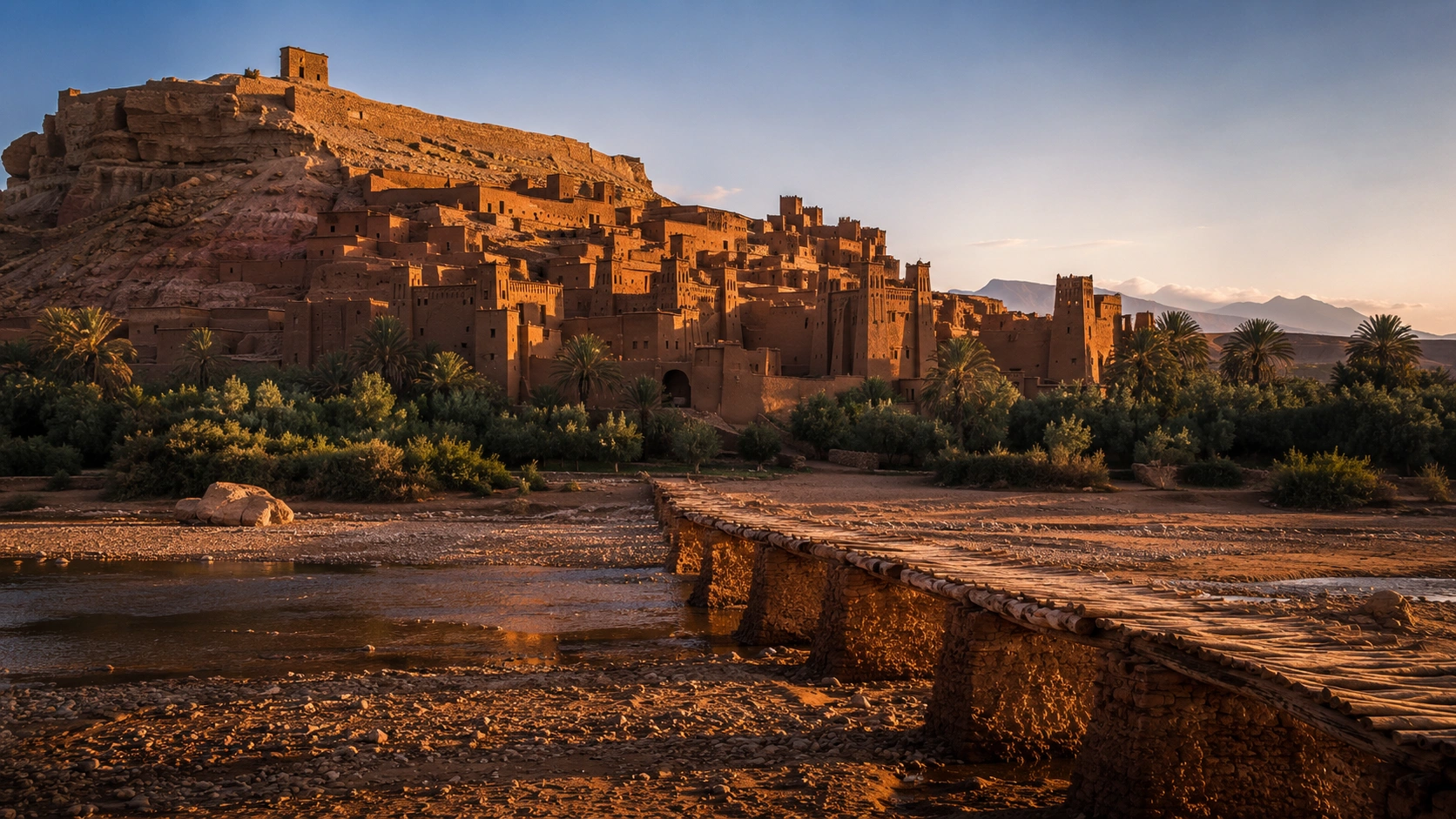
Ait Ben Haddou Morocco is the fortified earthen village nearly every Marrakech-to-Sahara road trip passes through — and for good reason. Perched above the Ounila River on the old caravan route between the Sahara and Marrakech, this UNESCO World Heritage ksar has starred in Gladiator, Game of Thrones, and Lawrence of Arabia without losing the handful of families who still actually live inside its walls. This guide covers what most blog posts skip: a clear breakdown of the confusing “entrance fee” situation, an honest USD budget, and a real comparison of the three ways to actually get there.
Quick Answer: What Is Ait Ben Haddou, Morocco?
Ait Ben Haddou is a fortified earthen village (ksar) in southern Morocco, about 180km (3.5–4.5 hours) from Marrakech via the Tizi n’Tichka pass, and just 30km (30 minutes) from Ouarzazate. It has been a UNESCO World Heritage Site since 1987 and is one of the best-preserved examples of southern Moroccan earthen architecture. Most visitors spend 1–3 hours exploring, technically for free, though a small customary local contribution is expected for path access and upkeep.
In This Ait Ben Haddou Morocco Guide
📚 Related Guides
Merzouga Morocco Guide
Zagora vs Merzouga
Morocco Itinerary 7 Days
🗺️ Tours by City
Tours from Marrakech
Day Trips in Morocco
Tours from Casablanca
📅 Ready to Book?
Visit Ait Ben Haddou the easy way, with a private licensed driver.
See Our Ait Ben Haddou Tours →1987
UNESCO Listing Year
180km
From Marrakech
1–3h
Typical Visit Length
4+
Major Films Shot Here
What Is Ait Ben Haddou Morocco? History & Architecture
Ait Ben Haddou is a ksar — a fortified group of earthen buildings enclosed by defensive walls — built along the banks of the Ounila River in southern Morocco. It sits on what was once a key stretch of the Trans-Saharan trade route, where caravans carrying salt, gold, and spices passed between the Sahara and Marrakech. Much of the current structure dates to around the 17th century, though the site’s origins as a settlement go back centuries earlier.
What makes Ait Ben Haddou Morocco genuinely remarkable is that it’s still partly inhabited — a handful of families continue to live inside the old walls, even though most residents relocated to the newer village across the river decades ago. Walking through means passing real homes, a small mosque, a public square, and kasbahs (fortified family homes) in varying states of restoration, some crumbling, some carefully maintained. It was inscribed as a UNESCO World Heritage Site in 1987, recognized as one of the best-preserved examples of southern Moroccan earthen architecture anywhere in the country.
How to Get to Ait Ben Haddou Morocco
Ait Ben Haddou Morocco sits about 180km southeast of Marrakech and just 30km from Ouarzazate, but “close to Ouarzazate” only helps if you’re already headed that way. Here are the three realistic ways to get there.
| Method | Time from Marrakech | Cost | Best For |
|---|---|---|---|
| Private tour/driver | 3.5–4.5 hours | $$-$$$ | First-timers, families, anyone continuing on to the desert the same day |
| Self-drive (rental car) | 3.5–4.5 hours | $$ | Confident drivers comfortable with mountain switchbacks on the Tizi n’Tichka pass |
| CTM/Supratours bus + taxi | 4.5–5.5 hours total | $ | Budget travelers with flexible time — bus to Ouarzazate, then a short taxi |
Whichever way you go, the drive itself is part of the experience: the Tizi n’Tichka pass through the High Atlas is one of Morocco’s most scenic roads, with sharp switchbacks, high-altitude viewpoints, and small Berber villages along the way. If you’re already in Ouarzazate, it’s a straightforward 30-minute taxi ride (negotiate the fare before getting in).
Entrance Fee: What It Actually Costs
This is the single most inconsistent piece of information across guides to Ait Ben Haddou Morocco, so here’s the honest version: there is no official government entrance fee to walk through the ksar. What you will encounter is local residents or informal caretakers at the footbridge or path entrances asking for a small customary contribution — for path access and general upkeep. This isn’t a scam; it genuinely supports the families who still live there and maintain the site. A polite, friendly attitude and small bills go a long way. If you climb to the old granary (agadir) at the top for the panoramic view, expect a similarly small informal fee from whoever maintains that specific path.
Best Time to Visit Ait Ben Haddou Morocco
Early morning or late afternoon are consistently the best times to visit Ait Ben Haddou Morocco — the light is softer, the earthen walls glow a deeper red-orange, and the midday tour-bus crowds haven’t arrived yet (or have already left). Spring (March–May) is particularly good, when the Ounila Valley turns green and contrasts sharply with the red-brown ksar. Summer visits are doable but midday heat is intense; plan around it rather than through it.
Things to Do at Ait Ben Haddou Morocco & Its Film Locations
There’s more to do at Ait Ben Haddou Morocco than a quick photo stop, if you know where to look.
- Wander the alleyways — narrow mudbrick passages, tunnels, and small courtyards, passing shops and the homes of the families who still live inside.
- Climb to the old granary — the agadir at the summit rewards the climb with panoramic views over the Ounila River valley, the desert plains, and the Atlas Mountains. Wear sturdy shoes; the paths are steep, uneven, and dusty.
- Spot the film locations — Ait Ben Haddou has appeared in Gladiator (the slave market scene), Game of Thrones (doubling as Yunkai, the Yellow City), The Mummy, and Lawrence of Arabia, among others.
- Visit the Atlas Film Studios in Ouarzazate — 30 minutes away, this working studio complex (nicknamed “Morocco’s Hollywood”) has hosted the same productions and is a natural add-on.
- Horseback riding — local stables offer rides around the ksar and through the surrounding hills, a genuinely evocative way to experience the old caravan-route setting.
- Mint tea on a rooftop — several rooftop cafés inside and near the ksar offer sweeping views along with the tea.
How Long Should You Stay at Ait Ben Haddou?
| Duration | What You’ll Cover | Best For |
|---|---|---|
| 1–3 hours (day trip) | Full walk through the ksar, the granary climb, and film-location spotting | Most visitors — this is genuinely enough time |
| Half day | Add horseback riding or the Atlas Film Studios in Ouarzazate | Film fans and those with a flexible schedule |
| Overnight | Sunset and sunrise light on the ksar without the midday crowds, plus a slower pace | Photographers and travelers not continuing straight to the desert |
For most itineraries, Ait Ben Haddou Morocco works best as a well-timed stop en route to the Sahara rather than a standalone overnight destination — it’s exactly how it functions in our own 7-day Morocco itinerary and 4-day Marrakech to Merzouga tour, both of which stop here on the way to the dunes.
Ait Ben Haddou Morocco Budget Guide (USD)
Here’s a realistic per-person breakdown for a day-trip visit, excluding the wider Sahara portion of your trip.
| Category | Budget | Mid-Range | Luxury |
|---|---|---|---|
| Transport from Marrakech (round trip) | Lower cost (bus+taxi) | Moderate cost (shared tour) | Higher cost (private driver) |
| Path/maintenance contribution | Lower cost | Moderate cost | Higher cost |
| Horseback riding (optional) | — | Lower cost | Moderate cost |
| Lunch/mint tea | Lower cost | Moderate cost | Higher cost |
| Total (per person, day trip) | Lower cost | Moderate cost | Higher cost |
Safety & Practical Tips for Ait Ben Haddou Morocco
- Footwear: Wear sturdy, closed shoes — the pathways are steep, uneven, and dusty, especially the granary climb.
- The “fee” situation: Expect friendly requests for small contributions at path entrances. Agree on any horseback riding or guide price before starting, not after.
- Heat: Midday sun with little shade inside the ksar can be intense, especially May–September — bring water and a hat.
- River crossing: A footbridge or stepping stones cross the Ounila River to reach the ksar; water levels rise after rain, so check conditions in wetter months.
- Photography: Ask before photographing residents directly, particularly around private homes and doorways.
- Official travel advisories: Check current guidance before you go — the UK Foreign Office Morocco advisory or the U.S. State Department Morocco page.
Meet the Local Guides Behind This Ait Ben Haddou Morocco Guide
Brahim — Lead Guide & Content
Licensed Morocco tour guide, 7+ years leading stops at Ait Ben Haddou on Marrakech–Sahara departures.
Our Driving Team
Licensed drivers who cross the Tizi n’Tichka pass weekly — why our timing estimates reflect real road conditions, not map optimism.
Client note: add real guide names, headshots, and license credentials here to complete the E-E-A-T signal.
Ait Ben Haddou Morocco: FAQ
Is Ait Ben Haddou Morocco worth visiting?
Yes. As one of Morocco’s best-preserved earthen ksars and a UNESCO World Heritage Site since 1987, it’s genuinely one of the most photogenic and historically significant stops between Marrakech and the Sahara.
Is there an entrance fee for Ait Ben Haddou?
There’s no official government entrance fee, but a small customary contribution is commonly requested by local residents at path entrances for maintenance and access.
How far is Ait Ben Haddou from Marrakech?
About 180km, roughly 3.5–4.5 hours by road via the Tizi n’Tichka pass through the High Atlas Mountains.
Can I visit Ait Ben Haddou without a tour?
Yes. It’s easily explored independently, and budget travelers can reach it by CTM or Supratours bus to Ouarzazate followed by a short taxi. A private tour or driver is simply faster and more flexible if you’re continuing on to the desert the same day.
Which films were shot at Ait Ben Haddou?
Gladiator, Game of Thrones (as Yunkai), The Mummy, and Lawrence of Arabia are among the best-known productions filmed here, alongside many others shot at the nearby Atlas Film Studios in Ouarzazate.
Key Takeaways: Ait Ben Haddou Morocco
- Ait Ben Haddou Morocco is a UNESCO-listed earthen ksar, 180km (3.5–4.5 hours) from Marrakech via the Tizi n’Tichka pass.
- There’s no official entrance fee, though a small customary local contribution is expected for path access.
- 1–3 hours is enough for most visitors; go early morning or late afternoon for the best light and fewer crowds.
- Total cost for a day trip depends on how you get there and your comfort level — see the budget breakdown above.
- It’s a natural stop on the way to the Sahara Desert, not a standalone destination requiring an overnight stay for most travelers.
Conclusion
Ait Ben Haddou Morocco earns its reputation as the most photographed stop on the road south — not because it’s polished for tourists, but because a handful of families still genuinely live inside its walls, exactly as travelers passing through on the old caravan route would have seen centuries ago. Time it right (early morning or late afternoon), budget a couple of dollars for the informal path fee, and give yourself the full hour or two to climb to the granary. If you’d rather have a local guide handle the drive and timing for you, that’s exactly what we do on every desert-bound departure.
Explore More
Book Your Ait Ben Haddou Day Trip
Private driver, guided walk, and flexible timing — all arranged.
See the tour →