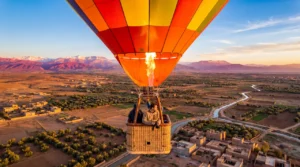
📅 Published: July 2026 | ⏱ 16 min read | 🗺️ 3 Route Options Compared | 👤 Morocco All Desert Tours — Local Guides
Morocco Itinerary 7 Days: The Complete Planning Guide for First-Timers
Marrakech, the Sahara Desert & the Atlas Mountains in one realistic, bookable week
If you’re searching for a Morocco itinerary 7 days long, chances are you’ve already found a dozen rushed, generic plans that try to cram five cities into a week that only really fits one honest loop. We’ve watched it happen on hundreds of departures. This guide gives you the opposite: one proven Morocco itinerary 7 days route (plus two credible alternatives), a full day-by-day plan with real driving times, an honest USD budget, and the safety and packing details nobody tells you until you’re already standing in the Marrakech medina wondering which way is north.
Quick Answer: Morocco Itinerary 7 Days
Yes, a Morocco itinerary 7 days long is enough for a solid first trip. The best route is a loop starting and ending in Marrakech: 2 days in Marrakech and the Atlas Mountains, 2–3 days crossing to the Sahara Desert via Aït Benhaddou and the Dades/Todra Gorges for a camel trek and night in the dunes, and 1–2 days back through Ouarzazate or via the coast at Essaouira. Pricing varies by season and comfort level, per person, for a mid-range trip, excluding flights.
In This Morocco Itinerary 7 Days Guide
📚 Related Guides
Camel Riding in Morocco: Prices & Safety
Essaouira Day Trip Guide
Three Valleys Excursion Guide
🗺️ Tours by City
📅 Ready to Book?
This exact Morocco itinerary 7 days route, run by our own local guides.
See Our Sahara Tours →7
Days, 1 Loop
3
Route Options Compared
Varies
Realistic Budget/Person
8
Competing Guides Analyzed
Morocco Itinerary 7 Days: Which Route Is Right for You?
Before picking a day-by-day plan, choose your loop. Almost every Morocco itinerary 7 days guide online pushes one single route and ignores the fact that Morocco has at least three genuinely different one-week trips worth taking, depending on what you actually want to see. Here’s an honest side-by-side.
| Route | Best For | Highlights | Driving Load |
|---|---|---|---|
| Southern Sahara Loop (this guide) | First-timers who want the classic “desert + kasbahs + mountains” trip | Aït Benhaddou, Dades & Todra Gorges, Erg Chebbi dunes, camel trek, High Atlas | Moderate — 2 long driving days (7–9h), rest under 4h |
| Northern Chefchaouen–Fes Loop | Travelers prioritizing imperial cities and culture over desert | Fes medina, Chefchaouen blue city, Meknes, Volubilis ruins | Light — mostly 2–4h transfers, no desert crossing |
| Marrakech + Coastal Essaouira Variant | Travelers who want a relaxed pace, beaches, and no overnight desert camp | Marrakech medina, Atlas day trips, Essaouira ramparts and beach, Agafay desert (no Sahara) | Lightest — longest single transfer is 2.5h to Essaouira |
Google itself flags the Northern loop as a common alternative for travelers who’d rather skip the long desert drive — it’s a legitimate choice, not a consolation prize. But if “seeing the Sahara” is on your list at all, it has to happen in these 7 days; you won’t reasonably add it on a return trip without flying back. That’s why the Southern Sahara Loop below is the route we build out in full for this Morocco itinerary 7 days guide, with the other two linked at the end for travelers who want a different week.
Morocco Itinerary 7 Days: The Full Day-by-Day Plan
Day 1 of This Morocco Itinerary 7 Days Plan — Arrive Marrakech
Morning: Land at Marrakech Menara Airport (RAK), a 20-minute transfer to the medina. Check in and get your bearings — don’t plan anything demanding on jet lag.
Afternoon: Walk the Jemaa el-Fnaa square and the souks of the old medina. Go with a guide the first time; the alleys are genuinely disorienting for first-timers and a local guide also means you’re not overpaying in the souks.
Evening: Rooftop dinner overlooking Jemaa el-Fnaa as the square fills with food stalls and performers at dusk.
Day 2 — Marrakech & the High Atlas
Morning: Visit the Bahia Palace and Saadian Tombs before the tour groups arrive (gates open 9am).
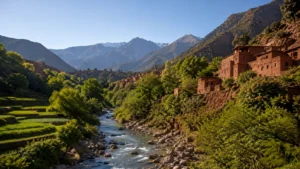
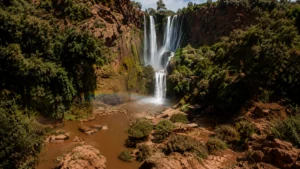
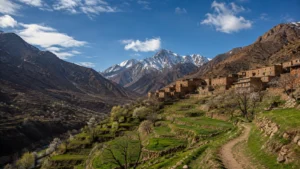
Afternoon: Half-day into the High Atlas foothills — Berber villages, waterfalls, and mountain air an hour from the city.
Evening: Back in Marrakech. This is a good night for a hammam and massage before the road days ahead — you won’t get another chance for three days.
Day 3 — Marrakech to Dades Valley (via Aït Benhaddou & Ouarzazate)
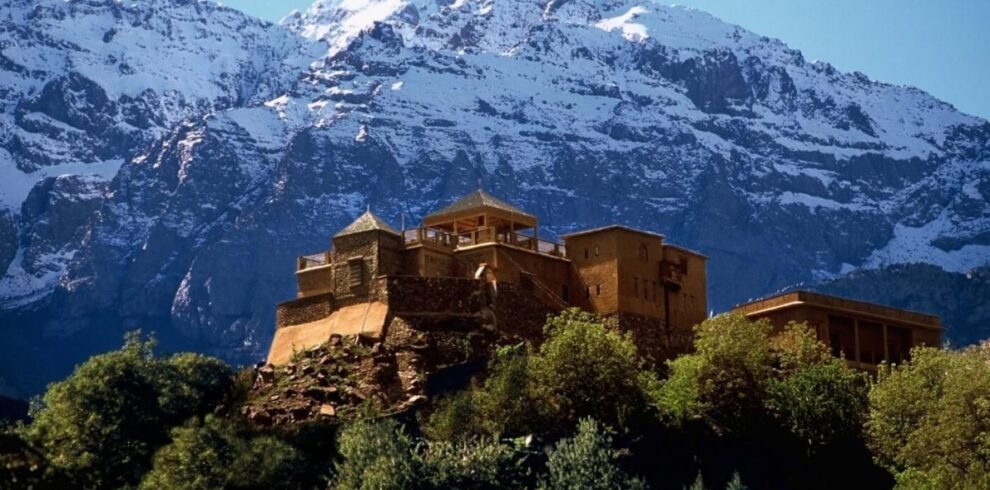
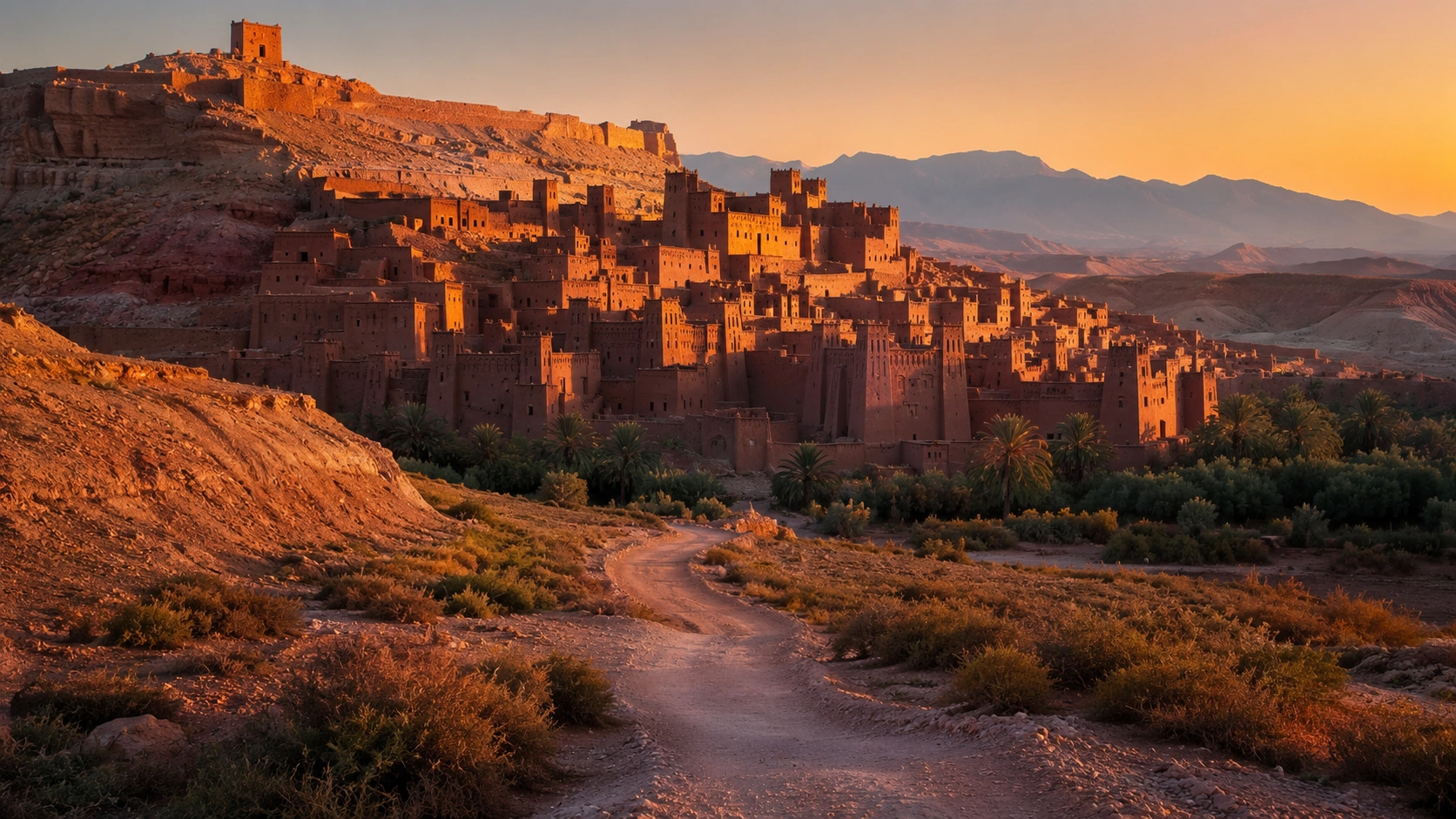
Morning: Depart early over the Tizi n’Tichka pass (2,260m), the highest paved road in the Atlas. Stop at Aït Benhaddou, the UNESCO-listed fortified village used in Gladiator and Game of Thrones.
Afternoon: Continue through Ouarzazate, Morocco’s film-studio capital, then into the Dades Valley — dramatic red rock formations and the start of the desert landscape.
Evening: Overnight in a Dades Gorge guesthouse. Total driving today: roughly 6–7 hours including stops.
Day 4 — Todra Gorge to Merzouga (Erg Chebbi Dunes)
Morning: Walk into Todra Gorge, where 300-meter rock walls narrow to a few meters apart — one of the most dramatic short hikes in Morocco.
Afternoon: Continue to Merzouga, gateway to the Erg Chebbi dunes. Check into your desert camp base and rest before the ride.
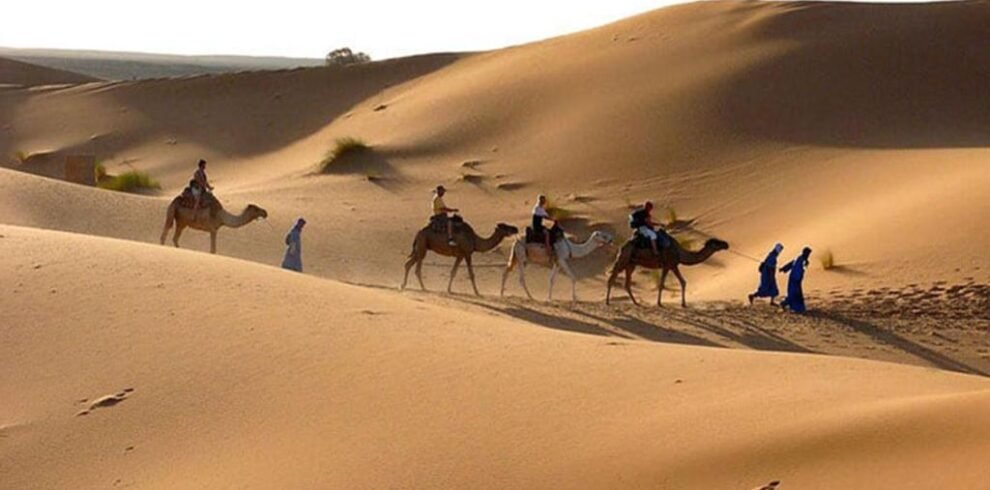
Evening: Camel trek into the dunes for sunset, then dinner under the stars at a desert camp with traditional music around the fire.
Day 5 — Sunrise in the Dunes & Return to Marrakech Direction (via Rissani & Zagora)
Morning: Sunrise over Erg Chebbi from the top of the dunes, then camel back to camp for breakfast.
Afternoon: Long drive toward the Draa Valley via Rissani (the old caravan trading town) and the Zagora road, one of Morocco’s most scenic drives lined with palm oases.
Evening: Overnight in Zagora or a Draa Valley kasbah.
Day 6 — Zagora to Marrakech
Morning: Depart for Marrakech via Agdz and the Tizi n’Tichka pass again, this time westbound.
Afternoon: Arrive back in Marrakech by mid-afternoon. Free time to revisit the medina, shop for anything you skipped Day 1, or simply rest.
Evening: Farewell dinner — this time try a Marrakchi specialty like tangia, slow-cooked in the embers of a hammam furnace.
Day 7 of This Morocco Itinerary 7 Days Route — Departure (or Essaouira Day Trip)
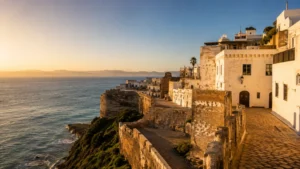
Morning: If your flight is in the evening, take a day trip to Essaouira, the windswept Atlantic port city, 2.5 hours from Marrakech.
Afternoon: Walk the ramparts and blue-and-white medina, have grilled seafood at the port.
Evening: Transfer back to Marrakech Airport for departure.
Morocco Itinerary 7 Days: Total Trip Cost Breakdown (USD, Per Person)
Most Morocco itinerary 7 days guides quote everything in euros. Since most searchers planning this trip are budgeting in USD, here’s a realistic per-category breakdown across three comfort tiers, excluding international flights.
| Category | Budget | Mid-Range | Luxury |
|---|---|---|---|
| Accommodation (6 nights) | Lower cost | Moderate cost | Higher cost |
| Desert tour w/ driver, camel trek & camp | Lower cost | Moderate cost | Higher cost |
| Food (7 days, 3 meals) | Lower cost | Moderate cost | Higher cost |
| Local transport not in tour | Lower cost | Moderate cost | Higher cost |
| Entry fees & activities | Lower cost | Moderate cost | Higher cost |
| Tipping (guide, driver, camp staff) | Lower cost | Moderate cost | Higher cost |
| Total (per person) | Lower cost | Moderate cost | Higher cost |
Booking a private multi-day tour that bundles driver, accommodation, and the desert camp — like our own Marrakech to Sahara tours — typically lands in the mid-range column and removes most of the logistics risk of self-driving the mountain passes on this Morocco itinerary 7 days route.
Best Time to Visit for a Morocco Itinerary 7 Days: Month-by-Month
| Month | Marrakech Temp | Sahara Days/Nights | Crowds | Verdict |
|---|---|---|---|---|
| Jan–Feb | 13–19°C | Mild / cold at night (0–5°C) | Low | Good, pack a warm layer for desert nights |
| Mar–May | 20–28°C | Warm / cool nights | High | Best overall — book accommodation early |
| Jun–Aug | 33–40°C+ | Very hot, 40°C+ days | Moderate | ⚠️ Desert daytime heat is serious — hydrate constantly, avoid midday sun |
| Sep–Nov | 22–30°C | Warm / pleasant nights | High | Best overall alongside spring |
| Dec | 12–18°C | Cold nights (near freezing) | Moderate | Good, festive season — pack layers |
What to Pack for a Morocco Itinerary 7 Days Trip (By Climate Zone)
This one Morocco itinerary 7 days loop crosses three climates in a single week — medina heat, high-mountain cold, and desert temperature swings of 20°C+ between day and night. Pack for all three.
- Medina & cities: Lightweight, modest clothing covering shoulders/knees, comfortable closed shoes for uneven cobblestones, a scarf for mosque courtyards.
- High Atlas pass: A warm layer and windbreaker even in summer — the Tizi n’Tichka pass sits above 2,200m and can be 15°C cooler than Marrakech.
- Desert (Merzouga): A headscarf or buff, sunglasses, sunscreen, and — critically — a warm layer for the night, since desert temperatures can drop 20°C+ after sunset even in warm months.
- Practical extras: Reusable water bottle, basic medical kit, power bank, and a physical printout of your riad address in Arabic for taxi drivers.
Safety, Etiquette & Practical Tips for Your Morocco Itinerary 7 Days Trip
Morocco is a safe, tourism-focused country and this Morocco itinerary 7 days route is run by thousands of travelers every year — but a few practical realities catch first-timers off guard.
- Solo & female travelers: Dress modestly, stay confident and direct with unwanted attention, and prefer riads with good reviews over anonymous guesthouses. A private guided tour removes most of the navigation and negotiation stress that causes the majority of reported hassle.
- Common scams: Unofficial “guides” offering free directions who then demand payment, and inflated taxi meters. Agree on taxi fares before getting in, or use your tour’s private driver.
- Etiquette: Ask before photographing people. Dress modestly, especially outside tourist zones. Friday is the main prayer day — expect some shops closed midday.
- Health: Tap water is best avoided for drinking outside major hotels; bottled water is cheap and everywhere. Sun protection matters more than most travelers expect, especially at desert elevation.
- Connectivity: A local eSIM or SIM card (available at the airport) is the easiest way to stay connected — Wi-Fi in desert camps is often limited or unavailable, which is part of the experience.
- Official travel advisories: Check your government’s current guidance before you go — for example the UK Foreign Office Morocco advisory or the U.S. State Department Morocco page.
If You Have 5 or 10 Days Instead of a Morocco Itinerary 7 Days Trip
| Duration | What Changes | Best For |
|---|---|---|
| 5 Days | Cut the Draa Valley return leg — drive straight back from Merzouga to Marrakech in one long day | Short layovers or add-on trips |
| 7 Days (this guide) | — | First-time visitors wanting the full loop at a sane pace |
| 10 Days | Add Fes, Chefchaouen, or the Atlantic coast at Essaouira for 2–3 extra nights | Travelers who also want the imperial cities |
Is a Morocco itinerary 7 days long enough? For this Southern loop, yes — it’s the sweet spot before the driving-to-sightseeing ratio starts working against you. If you’re weighing a longer trip, our 9-Day Marrakech to Merzouga and Chefchaouen tour shows exactly how those extra days get used.
Meet the Local Guides Behind This Morocco Itinerary 7 Days Route
Every route, drive time, and price on this page comes from guides who actually run it — not from a desk. Our team is based in Marrakech and drives this exact Sahara loop year-round.
Brahim — Lead Guide & Content
Licensed Morocco tour guide, 7+ years running Marrakech–Sahara departures. Writes and fact-checks our route guides directly from the road.
Our Driving Team
Licensed mountain-pass drivers who cross the Tizi n’Tichka multiple times a week — the reason our timing estimates on this page reflect real conditions, not Google Maps optimism.
Client note: add real guide names, headshots, and license credentials here to complete the E-E-A-T signal — this is the one section a blog competitor cannot replicate.
Morocco Itinerary 7 Days: FAQ
Is a Morocco itinerary 7 days long enough?
Yes, for one well-planned loop. Seven days is enough to see Marrakech, cross the High Atlas, reach the Sahara for a camel trek and desert camp, and return — without the multi-city overreach that ruins many first Morocco trips.
What is the best Morocco itinerary 7 days route?
For first-timers, the Southern Sahara Loop from Marrakech — via Aït Benhaddou, the Dades and Todra Gorges, and Merzouga’s Erg Chebbi dunes — is the best balance of desert, mountains, and culture in one week.
Can you see the Sahara and Marrakech in one week?
Yes. The drive from Marrakech to Merzouga takes roughly 8–9 hours, which is why this Morocco itinerary 7 days plan splits it across two days with an overnight in the Dades Valley rather than one exhausting drive.
Is it safe to travel in Morocco for 7 days as a solo traveler?
Generally yes. Morocco is a well-established, tourism-focused destination. Solo travelers, including women, do this route regularly — dressing modestly and booking a private guided tour removes most of the friction around navigation and unwanted attention.
How much does a Morocco itinerary 7 days trip cost?
Total cost depends on your comfort level and the season you travel — see the tiered breakdown above for what each category typically covers.
Key Takeaways: Morocco Itinerary 7 Days
- A Morocco itinerary 7 days long is enough for one honest loop, not multiple cities crammed together.
- The Southern Sahara Loop (Marrakech → Aït Benhaddou → Dades/Todra → Merzouga → Zagora → Marrakech) is the strongest route for first-timers.
- Pricing varies by season and comfort level, per person, for a realistic mid-range trip, excluding flights.
- Spring (Mar–May) and autumn (Sep–Nov) are the best months; summer desert heat requires real precautions.
- Booking a private local operator removes the two biggest risks of this route: mountain-pass driving and desert-camp logistics.
Conclusion: Making the Most of Your Morocco Itinerary 7 Days
The itineraries that go wrong aren’t the ones that see too little of Morocco — they’re the ones that try to see too much. This Morocco itinerary 7 days plan, the Southern Sahara Loop, is the version of the trip that actually gets executed the way it looks on paper: two unhurried days in Marrakech, a proper two-day crossing to the desert with real stops instead of a blur through the window, a night under the stars in Erg Chebbi, and a return that still leaves you with energy for a last dinner in the medina. If you’d rather have local guides handle the driving, timing, and camp bookings for you, that’s exactly what we do every week.
Explore More
Book This Morocco Itinerary 7 Days Route
Private driver, riad stays, and Sahara camp — all arranged.
See the tour →