Is a Morocco Desert Tour Safe? The Honest 2026 Guide
🏛️ Pillar Guide · Morocco Desert Safety- The Direct Answer
- What Real Risk Actually Looks Like
- Safety by Route: Merzouga, Zagora, Agafay, Erg Chigaga
- Is It Safe for Solo Female Travelers?
- Morocco Desert Tour Scams to Watch For
- Health, Insurance, and Medical Safety
- Are Desert Camps Safe at Night?
- How to Choose a Trustworthy Operator
- Related Desert Safety Guides
- FAQ
The safety of a Morocco desert tour is the single most-searched question by travelers planning a Sahara trip — and most operator websites answer it with a vague “yes, totally safe!” and move on. That’s not good enough when you’re deciding whether to send a deposit. This is the main safety guide for every Morocco desert tour we run — Merzouga, Zagora, Agafay, and Erg Chigaga — and it links out to a deeper, route-specific and traveler-specific guide for each concern: solo female travel, scams, health, and route-by-route risk profiles. Bookmark this page; it’s the hub for everything related to desert safety on this site.
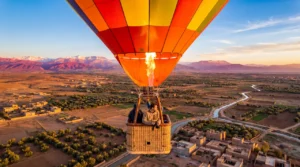
Yes. Morocco desert tours are safe in 2026 — violent crime against tourists in the Sahara region is extremely rare. The real risks are environmental (heat above 45°C in summer, dehydration) and a small number of avoidable booking scams (misleading camp photos, surprise fees). Choose a licensed operator who confirms inclusions in writing, stay with your guide, and the Sahara is one of the safest adventure trips available in 2026.
🏜️ What Real Risk Actually Looks Like
Morocco’s Sahara regions — Merzouga, Erg Chebbi, Zagora, Erg Chigaga — are some of the most heavily toured, monitored parts of the country. Tourism is a pillar of the local economy, so these routes are policed, well-traveled, and used by hundreds of operators every week. There has been no significant security incident targeting tourists in Morocco’s desert regions in recent memory.
That doesn’t mean nothing can go wrong. It means the things that can go wrong are predictable, well-documented, and almost entirely preventable.
Crime and Personal Safety
Petty theft — the most common safety concern in Morocco overall — is concentrated in city medinas like Marrakech and Fes, not the desert. Once you’re past Ouarzazate heading toward Merzouga or Zagora, you’re in small communities where tourism is the main livelihood. Camps employ local staff, often the same families for years, and your guide’s income depends directly on your trip going well. Most of our tours from Marrakech use the same trusted camps and drivers on every departure, which is exactly why repeat bookings and reviews matter so much in this business.
The Real Danger: Heat, Not People
This is the part most “is it safe” articles skip past too quickly. The Sahara’s actual hazard is the climate, not other people.
| Season | Daytime Temp | Main Risk |
|---|---|---|
| June–August | 40–48°C | Severe heat exhaustion, dehydration |
| September–October | 28–35°C | Mild dehydration risk |
| November–February | 18–25°C day / ~0°C night | Cold nights, not heat |
| March–May | 25–32°C | Comfortable, lowest risk window |
If a tour operator’s itinerary has you riding camels at 1pm in July with no shade breaks, that’s a red flag about the operator, not the desert itself.
Getting Lost in the Dunes
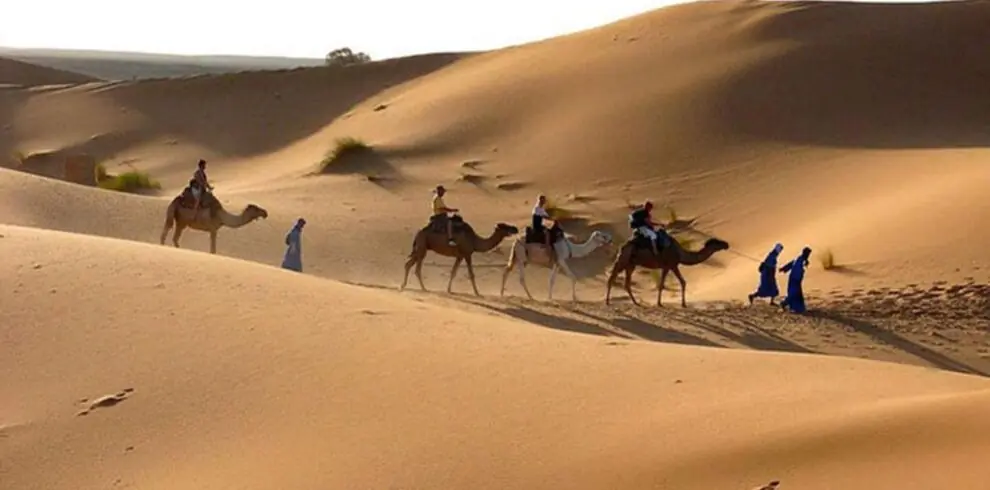
The dunes of Erg Chebbi and Erg Chigaga are visually disorienting — one ridge of sand looks like the next, and there are no fixed landmarks once you’re a few hundred meters from camp. Every documented “lost tourist” story in the region involves someone wandering off from the group, usually at sunset for photos, without telling the guide. This is the one genuinely preventable risk in this entire guide: never walk away from your group out of sight of your guide, even for ten minutes, and agree on a simple “I’m heading that way for a photo” rule with your group before you arrive.
Road Safety Getting There
Statistically, the drive to the desert — not the desert itself — is where most documented tourist incidents in Morocco actually happen, mainly fatigue-related accidents on long mountain routes like the Tizi n’Tichka pass. This is an argument for booking with an operator who uses licensed, experienced drivers and builds in proper rest stops, not a reason to avoid the trip. This applies whether you’re starting your tour from Casablanca, from Fez, or from Tangier — ask how many hours of driving are scheduled per day and whether the route includes overnight breaks rather than one long push.
🗺️ Safety by Route: Merzouga, Zagora, Agafay, and Erg Chigaga
Each route has a slightly different risk profile. Quick summary below — full breakdowns linked as we publish them.
The most-traveled desert route in Morocco. Well-established camps, dense operator competition, strongest mobile signal coverage of any desert route. Main risk is summer heat, not security.
Check Availability →Shorter drive than Merzouga, smaller dunes, fewer operators which means more due diligence needed on choosing one. Good option if you want a quieter desert experience.
Check Availability →Close enough to Marrakech for a day trip or overnight, meaning fastest access to medical help if needed. Good first option if you’re nervous about a multi-day remote trip.
Check Availability →The most remote major dune route — further from medical facilities and mobile signal. Not more dangerous from a security standpoint, but the “plan for the remoteness” rules in this guide matter more here than anywhere else.
Check Availability →👩 Is It Safe for Solo Female Travelers?
This is the single most-searched question about Morocco desert tours that almost no operator website actually answers honestly — so here it is straight. Thousands of solo women do Morocco desert tours every year and report it as one of the best trips of their lives. The real issue isn’t danger, it’s unwanted attention — catcalling, persistent “compliments” from men in towns along the route. It’s uncomfortable, not dangerous, and it almost never escalates to physical contact.
🚩 Morocco Desert Tour Scams: What to Actually Watch For
Search “Morocco desert tour scam” and you’ll find a lot of vague warnings. Here are the specific, documented patterns:
| Scam Pattern | How to Avoid It |
|---|---|
| Camp photo bait-and-switch | Ask for recent guest photos, not brochure shots |
| Surprise camel trek fees | Get inclusions confirmed in writing before paying |
| Unlicensed operator reselling | Ask for the tourism license number |
| Full payment to a personal account | A $50–150 deposit is normal; full upfront wire to an individual is a red flag |
| Vague itinerary, no fixed stops | A real operator names specific stops and accommodation type |
- Violent crime against tourists in the Sahara is rarer than in most European city centers
- The real dangers are heat above 45°C, dehydration, and wandering off-route in the dunes
- Solo female travelers face unwanted attention, not physical danger — and it’s manageable
- The most common scam is misleading bookings, not violence
- A licensed operator who answers questions clearly removes almost all of the actual risk
🏥 Health, Insurance, and Medical Safety
Tap water in cities is generally treated, but bottled or filtered water is the safer default on desert routes — partly to avoid stomach upset, partly to reduce plastic waste in remote areas. Private hospitals in Marrakech, Fes, and Casablanca are good quality but require upfront payment, so travel insurance with medical evacuation coverage is genuinely important for desert routes. A medical evacuation from a remote stretch near Erg Chigaga can run into the tens of thousands of dirhams without it.
Basic first aid and any personal medication should travel in your daypack, not checked luggage, since multi-day tours sometimes mean a full day before you reach a town with a pharmacy.
🌙 Are Desert Camps Safe at Night?
Yes. Reputable camps have permanent local staff and are used nightly by tour groups throughout the season — this isn’t a one-off setup for your visit. The main practical advice is simply not to wander into the dunes alone after dark, for the same disorientation reason covered above, not because the camp itself is unsafe. Temperatures also drop fast after sunset, including in summer, so the real night-time risk is being underdressed, not anything related to safety from people.
Fixed luxury camps (with permanent structures) and mobile bivouac camps (tents set up fresh for your group) have different night-time profiles worth knowing before you book: fixed camps have more staff and infrastructure on-site, while mobile camps are more remote and intimate but mean your guide is your only point of contact until morning. Neither is “unsafe” — it’s a comfort-level choice, not a risk one.
✅ How to Choose a Tour Operator You Can Trust
If an operator hesitates to answer any of the items below, or you simply want to verify something directly before paying a deposit, reach out to our team — we’d rather answer ten extra questions than have you book somewhere uncertain.
Ask a Real Local Guide — Not a Chatbot
Message us on WhatsApp and we’ll answer it directly, including the awkward ones.
Chat With Us on WhatsApp →🔗 Related Desert Safety Guides
This page is the safety hub for our full Morocco Desert Tours blog and guides library. As we publish each dedicated guide below, it will link directly from this page — bookmark this article and check back, or contact us directly if you need an answer on one of these topics right now.
❓ Frequently Asked Questions
A Morocco desert tour is safe in the way that matters most: you are extremely unlikely to be a victim of crime or violence. The actual risks — heat, dehydration, a poorly-chosen operator — are entirely within your control before you even land in Morocco. The single biggest factor in how safe and enjoyable your trip feels is who you book with.
That’s exactly why we built Morocco All Desert Tours the way we did: every guide is locally based, every camp is one we’ve personally vetted, and every price is confirmed in writing before you pay a single dirham. Book with a company that’s licensed, transparent, and answers your questions before you book — not after.